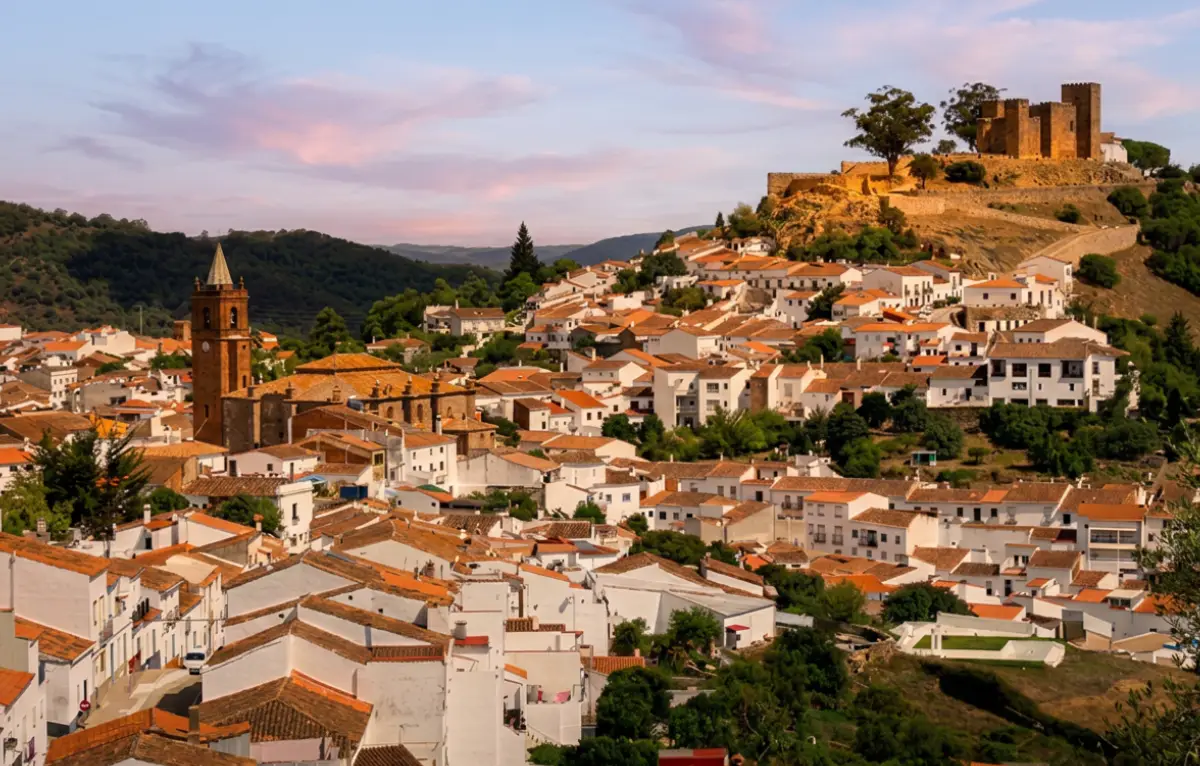
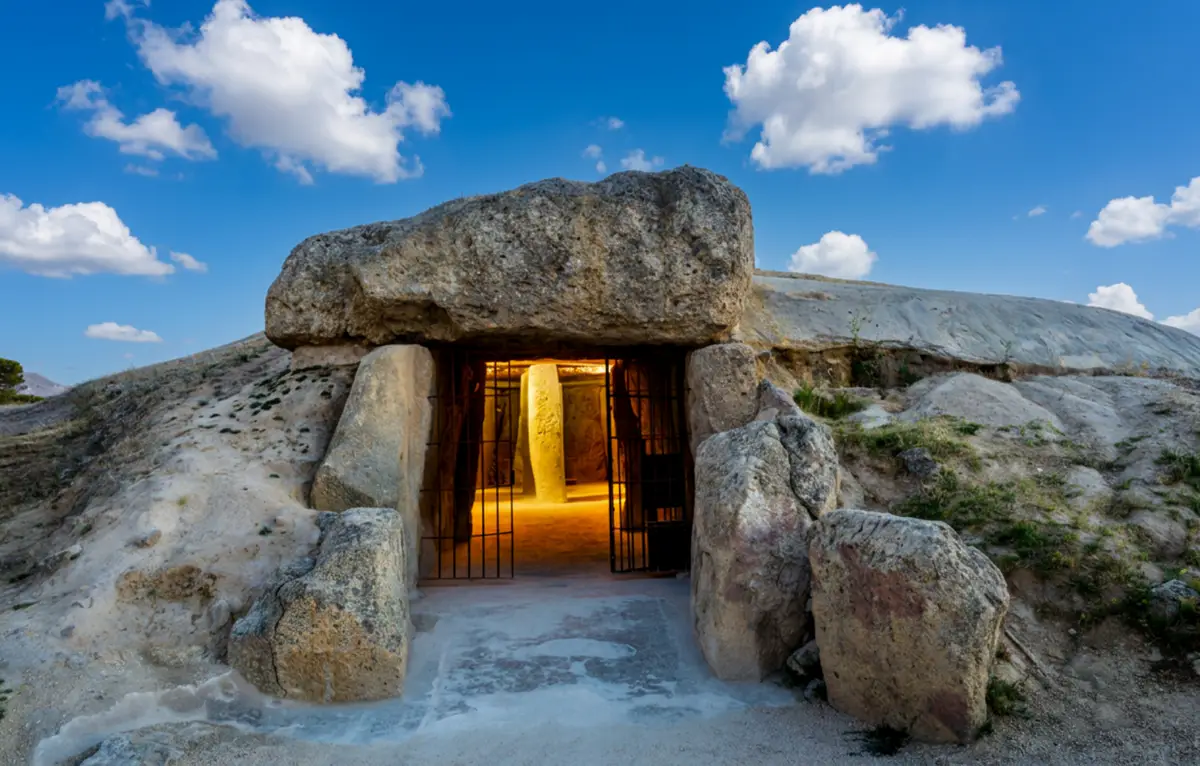
In Antequera, inside a chamber carved into landscape 6,000 years ago, there's a question that refuses to resolve.
Why would you do this?
Why would you look at a 40-ton piece of granite and decide that your entire adult life—50 years of labor, strategy, coordination with hundreds of people—would be spent moving it into position for a structure you wouldn't live to see completed? Why commit to a vision that would outlive you by millennia?
That question is why we're here.
Standing in the Darkness
You're inside the Dolmen of Menga. The paved walkways of the visitor center are behind you. The regulated access is behind you. The information plaques written for a 6th-grade reading level are behind you.
What remains is stone. Darkness. Weight.
Your hand touches granite that has held its position for 6,000 years. Not through mortar. Not through any mechanism we'd recognize. Through precision. Through the sheer engineering knowledge of people we assume were primitive.
The walls press in. Not threateningly. Intentionally. The corbelled ceiling—a technique that shouldn't exist at this point in human history—rises above you, each stone placed to lock the ones beside it, creating a chamber that has survived earthquakes, invasions, time itself.
And you're completely alone.
This is not the Antequera most people experience. They arrive by train, take an Uber to the visitor center, walk a paved path past information plaques, take a photograph from the designated viewing angle, and leave. They've "seen" Antequera. They've encountered it as spectacle—regulated, categorized, safe.
But standing here, in the actual darkness of an actual chamber that holds 6,000 years of human intention, you're experiencing something entirely different.
You're not in a tourist attraction. You're in a question made manifest in stone.
Ready to touch 6,000-year-old stone instead of reading about it behind glass?
Every INNYOU journey is private, unhurried, and guided by people who've spent decades studying these sites — not reading from scripts. Tell us what depth looks like for you.
The Impossibility Beneath Your Feet
Here's what makes Menga remarkable: it shouldn't exist.
Not romantically. Technically.
The corbelled ceiling technique—where each successive stone is placed to lean inward, creating an arch through pressure and gravity rather than through any mechanical innovation—appears nowhere else in Neolithic Europe. You can look through 6,000 years of human architecture, across every known civilization of that era, and find nothing comparable to what you're standing beneath.
Yet here it is. Perfected. Structural. Enduring.
When you stand under this ceiling, the first question that emerges isn't "how did they build it?" It's more unsettling: "how did they know to build it this way?"
The conventional answer is isolated genius. A culture that, through trial and error, discovered an engineering principle that wouldn't reappear in European architecture for thousands of years. Possible, perhaps. But then you have to explain why they never used it anywhere else. Why this technique exists only here, only once, and then disappears from human knowledge as though it was never discovered.
The alternative answer is knowledge we've lost. A sophisticated understanding of structural engineering that existed before the Neolithic, was transmitted through this culture, and then—catastrophically—was forgotten. Knowledge that had to be rediscovered independently, centuries later, by civilizations that had no memory of Antequera.
Nobody's certain which. But standing beneath the corbelled ceiling, with 40-ton stones balanced above you, you understand something crucial: the people who built this weren't subsistence farmers playing with rocks. They were engineers with sophisticated knowledge. Deliberately applied.
The Alignment That Shouldn't Matter
Now observe something stranger.
During the spring and autumn equinoxes—the moment when day and night are equal length—sunlight penetrates this chamber at a precise angle. Not metaphorically. Literally. At this specific moment in the year, light travels through the entrance and illuminates the far wall of the chamber at a depth no other sunlight reaches.
The alignment is exact. Not approximate. Not close. Precise enough that you can see it happen, year after year, centuries after century, in the same moment.
This means something.
It means that whoever designed this chamber had mapped the celestial sphere. Had calculated the path of the sun at different seasons. Had understood geometry in three dimensions—translating astronomical observation into architectural placement. Had built a structure to capture a moment of light they couldn't predict without mathematical knowledge.
And here's the question that troubles archaeologists: why?
If you're inside the chamber during the equinox, you see the light. It's beautiful. It's functional—it illuminates the interior at a specific ceremonial moment. But the precision goes beyond what's necessary for that experience. The alignment is so exact that it couldn't have been achieved through experimentation. It required advance calculation.
Which means: they built it for verification from outside. They calculated the alignment mathematically, built the structure to achieve it, and then—somehow—verified that their calculation was correct. All without the instruments we associate with astronomical precision. All without written records we can now access.
This suggests knowledge that shouldn't exist at this time. Knowledge that matches what we find in later civilizations—the Egyptians, the Babylonians—but appearing here, 6,000 years ago, in a place we've decided to call primitive.
They weren't primitive. They were different. Differently organized. Differently motivated. Accessing knowledge systems that predate the civilizations we've built our historical narratives around.
When you stand in Menga and understand this, something shifts. Not in the chamber. In you.
The Neolithic stops being abstract. It becomes a civilization. Sophisticated. Intentional. Operating at scales of knowledge we've underestimated.
The dolmens are just the entrance.
Antequera sits at the heart of a megalithic landscape that stretches across Andalusia — stone chambers, astronomical alignments, and civilizations most travelers never learn existed. If Menga and Viera changed how you think about prehistory, the full megalithic route will dismantle everything you thought you knew.
The Deeper Question
None of this happens without something else: belief in a future you won't see.
Moving a 180-ton stone requires organization. Hundreds of people working in coordination. A surplus of resources—food to feed workers, tools, leadership structure, collective commitment to something that transcends individual survival.
This isn't subsistence culture. This is civilization. People who've organized themselves around a priority. A belief system powerful enough to justify dedicating the surplus of your entire society's resources to moving stones.
What belief could command that commitment?
The standard answer: burial rites. Ancestor veneration. The Dolmen was a tomb, and the monumentality expressed the significance of the dead.
But that's incomplete.
Because these chambers held over 100 bodies. Not honored individuals. Communities. Accumulated over decades. The message encoded in this choice is extraordinary: you don't journey into the afterlife alone. Your entire community accompanies you. Your grandmother's bones and your enemy's bones rest together, eternally. Death erases hierarchy.
That's a profound statement about society. About belief. About what holds a community together.
Someone looked at that vision and said: we need to build an architecture that expresses this. We need to move 40-ton stones. We need to spend 50 years doing it. We need to align it with the heavens. We need to create a space so precisely engineered that it endures for 6,000 years.
And then they did it.
That commitment—that refusal to let this belief die with your generation—is what separates primitive subsistence from civilization.
The Subtler Lesson
Viera is smaller than Menga. Less monumental. If you visit both in a single day—as you should—the contrast teaches you something essential.
Menga is spectacle. Engineering pushed to its limits. Scale as statement. When you stand inside, you feel awe. The weight of stone above you. The impossibility of it all. The 6,000-year-old defiance of it.
Viera is intimate. A corridor tomb. Smaller chambers. Aligned with the same equinox precision as Menga, but built for a different purpose. Not to inspire. To function.
The difference is crucial.
If both chambers served the same purpose, you'd expect them to be identical. But they're not. Menga is communal and grand. Viera is private and practical. One says: look at what belief can accomplish. The other says: here is how we actually bury our dead.
Both statements are architectural. Both are true.
That teaches you something about the culture that built them: diversity of purpose. Different needs. Different sites designed for different functions. This wasn't a culture with one solution to everything. This was a civilization adapting its knowledge to different contexts.
When you move slowly through both chambers, with time to sit and observe, patterns emerge. You stop being a tourist collecting sites. You start becoming an interpreter of landscape. You begin to read what the stones are saying about the people who placed them.
The Landscape as Teacher
The dolmens weren't built in isolation.
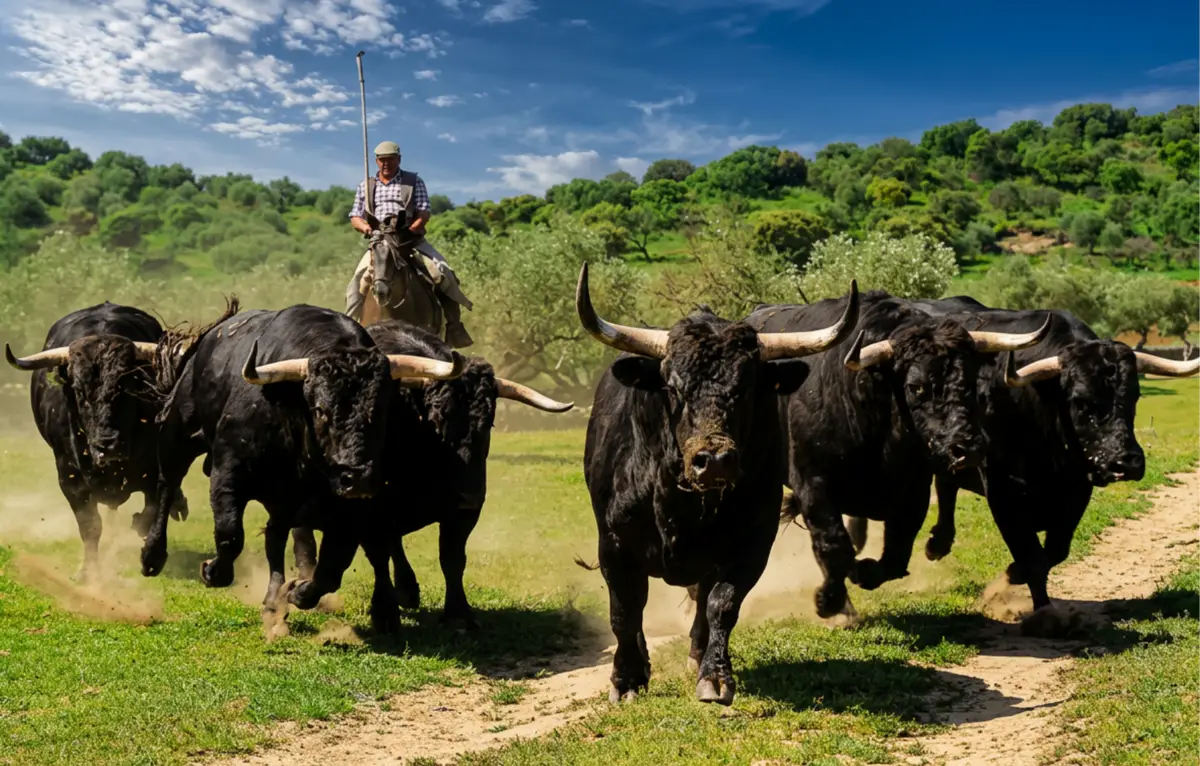
They sit within the dehesa—a landscape that has been managed continuously for 6,000 years through the same principles that sustained the people who built Menga. The pasture. The oak forests. The seasonal flows of water. The rotation of grazing.
Stand in the landscape around the dolmens, and you're standing in an ecosystem that has been refined over millennia. Not wilderness. Not industrial agriculture. Something different: a working relationship between human intentionality and natural systems.
The people who built Menga understood their landscape as deeply as any modern ecologist. They knew seasonal animal movements. They knew sustainable harvesting practices. They knew water management. They organized their community around these ecological realities.
This landscape has endured for 6,000 years because the people who steward it refused to extract more than the land could regenerate. Every season, the dehesa sustains itself. Every year, it's still there. Every generation, it still feeds people.
That's not accident. That's knowledge.
When you understand that the people who built Menga were also the people who maintained this landscape—when you see that their engineering knowledge and their ecological knowledge came from the same source—you stop seeing them as builders of monuments and start seeing them as stewards of systems.
That changes everything about how you interpret what they did.
The Dolmen isn't separate from the dehesa. It's the dehesa's focal point. The landscape's organizing principle. The stone chamber at the center of the land, asking: what do we believe is worth organizing our society around?
And the answer, written in agriculture and ecology and 6,000 years of unbroken land stewardship, is: belonging. Community. The belief that we don't live alone, and we don't die alone, and the land we share will outlast us all.
From Stone to Table
After the morning inside the dolmens—standing in darkness, investigating questions that have waited 6,000 years—there's lunch.
This is when the experience completes itself.
Antequera has its own culinary identity. The Porra Antequerana isn't performed for tourists. It's a thick gazpacho—tomatoes, bread, olive oil—that exists because these ingredients thrive in this climate, because generations of people discovered what combination sustains and nourishes, because the recipe carries the knowledge of place embedded in every preparation.
El Molete—simple bread toasted with olive oil and tomato—isn't Instagram-able. It's breakfast as it's been eaten here for centuries, because it works, because it's efficient, because it answers the question: how do you feed yourself from what this land provides?
The local wines come from vineyards that have occupied the same hillsides for hundreds of years. The jamón comes from mountain villages that have raised pigs in the same way for generations.
When you eat this food after spending time inside 6,000-year-old tombs, something clicks that reading about it never accomplishes.
You're not consuming about Antequera. You're consuming with Antequera. You're tasting the knowledge of people who understood how to live in relationship with a landscape. You're nourishing yourself with the same earth that sustained the people who built Menga.
This is slow travel. Not performed. Not staged. Real.
This is what cultural experience actually looks like: not monuments viewed from a distance, but integration into the systems—culinary, ecological, architectural—that made those monuments possible.
What Time Actually Teaches
You don't leave Antequera having "accomplished" something.
You don't check a box. You don't add the Dolmen of Menga to a list of sites visited.
What you leave with is changed understanding.
It arrives subtly. Not in the moment. Later. Weeks later, when you're reading history and suddenly the Neolithic period stops being abstract. It's connected to actual people making actual choices. To engineers solving problems that shouldn't have been solved. To a community that believed something strongly enough to dedicate 50 years of collective labor to it.
That's not a tour experience. That's an education.
It only arrives if you're willing to spend time. If you're willing to sit in darkness. If you're willing to listen to someone who's spent decades studying these sites—not reading from scripts, but sharing research, offering perspective, asking questions alongside you rather than delivering answers.
Carlos Rodríguez has spent nearly 40 years with Luz Bona in these landscapes. Not as tour guides. As students. As people committed to understanding what these stones are still trying to teach us.
When you visit Antequera with guides like this, you're not getting information delivered. You're getting thinking modeled. You're getting the opportunity to sit with someone who's asked these questions for decades and hasn't stopped asking them.
That's available only if you move slowly. If you listen deeply. If you're willing to stay with the investigation even when there are no definitive answers.
The Question That Remains
The dolmens have stood for 6,000 years. The question they ask has stood just as long.
Why would you commit your life to something you'd never see finished?
Not "how were they built?" That's a technical question. There are answers—answers that emerge slowly when you stand in the place and let the architecture teach you.
But the deeper question—the one that makes the engineering matter—is about conviction. About sacrifice. About believing in a future you won't inhabit.
That question doesn't resolve in a moment. It settles into you over time. It changes how you think about legacy. About what's worth dedicating yourself to. About whether a commitment loses value if you don't live to see its completion.
The people who built Menga answered those questions in stone.
Their answer remains. Still asking. Still waiting for someone curious enough to sit with the question long enough to understand why it matters.
When you're ready to investigate that question—not as a tourist, but as someone willing to think differently—the dolmens are waiting.
The dolmens are open to everyone. The understanding isn't.
Archaeologists, local historians, families who've stewarded this land for generations — INNYOU connects you to the people who turn stone into story. If you want to leave Antequera having understood something, not just photographed it, let's build your journey.