
What Standing Inside 5,700 Years of Intention Teaches You
UNESCO World Heritage · Menga · Viera · El Romeral
Neolithic Sacred Landscape · 5,700 Years of History · Private Experience from Seville or Málaga
What happens when you stand inside the Antequera Dolmens — a 5,700-year-old stone chamber — with a historian who believes ancient civilizations knew far more than we've been taught.
— Luz Bona, Tour Manager
When You Stop Moving, Everything Becomes Clear
You can visit the Antequera Dolmens as a tourist. Walk a paved path. Take photos from the designated viewing angle. Read a board about Neolithic burial practices. Leave thinking you've seen something.
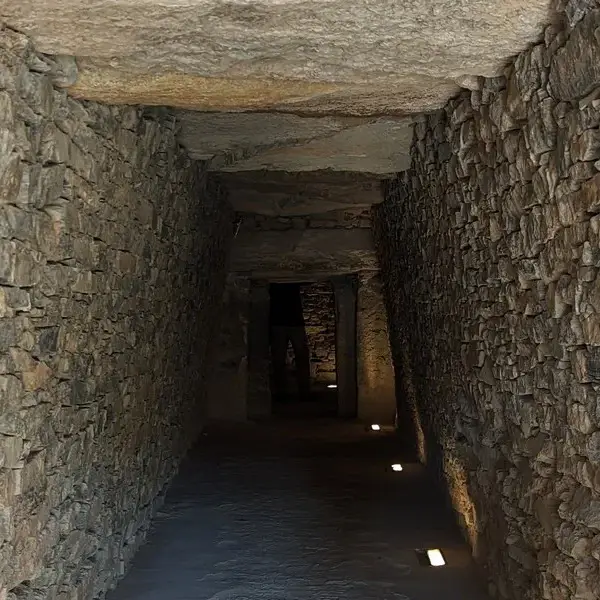
Or you can stand inside a stone chamber built when Rome didn't exist, and feel 5,700 years (according to the official narrative) of human intention accumulate around you.
There's a difference between visiting and understanding. This experience is structured around the second.
Experience the Antequera Dolmens Like Nobody Else
This is a private tour — designed only for you and your group. Tell us when you're traveling.
The Investigation
Inside the Dolmen of Menga, inside a stone chamber built when Rome didn't exist, when Egypt hadn't built pyramids, you'll encounter something most people never grasp about ancient civilizations.
These people understood something.
Not randomly. Not through trial and error. Deliberately. They understood architecture. They understood geometry. They understood that how you build affects how consciousness works.
Spend a full day moving through three separate dolmens, each built at a different moment, each designed for a different purpose, and you begin to see patterns. You begin to understand what questions the ancient builders were asking.
The official interpretation says: these are tombs. Burial sites. Practical structures for the dead.
But standing inside them, with time and silence and someone who's spent decades thinking about them, you encounter something deeper.
These are questions carved into stone.
And when you leave Antequera, you carry those questions with you.
The Structure of Understanding
This day isn't random. Each location teaches you something that prepares you for the next.
Menga
Menga teaches you about scale. About ambition. About what a civilization believes is worth dedicating resources to. The stones weigh up to 180 tons. You're standing under weight that shouldn't be there. That's the point. It's precision turned into presence. Architecture that speaks directly to something in human consciousness.
Viera
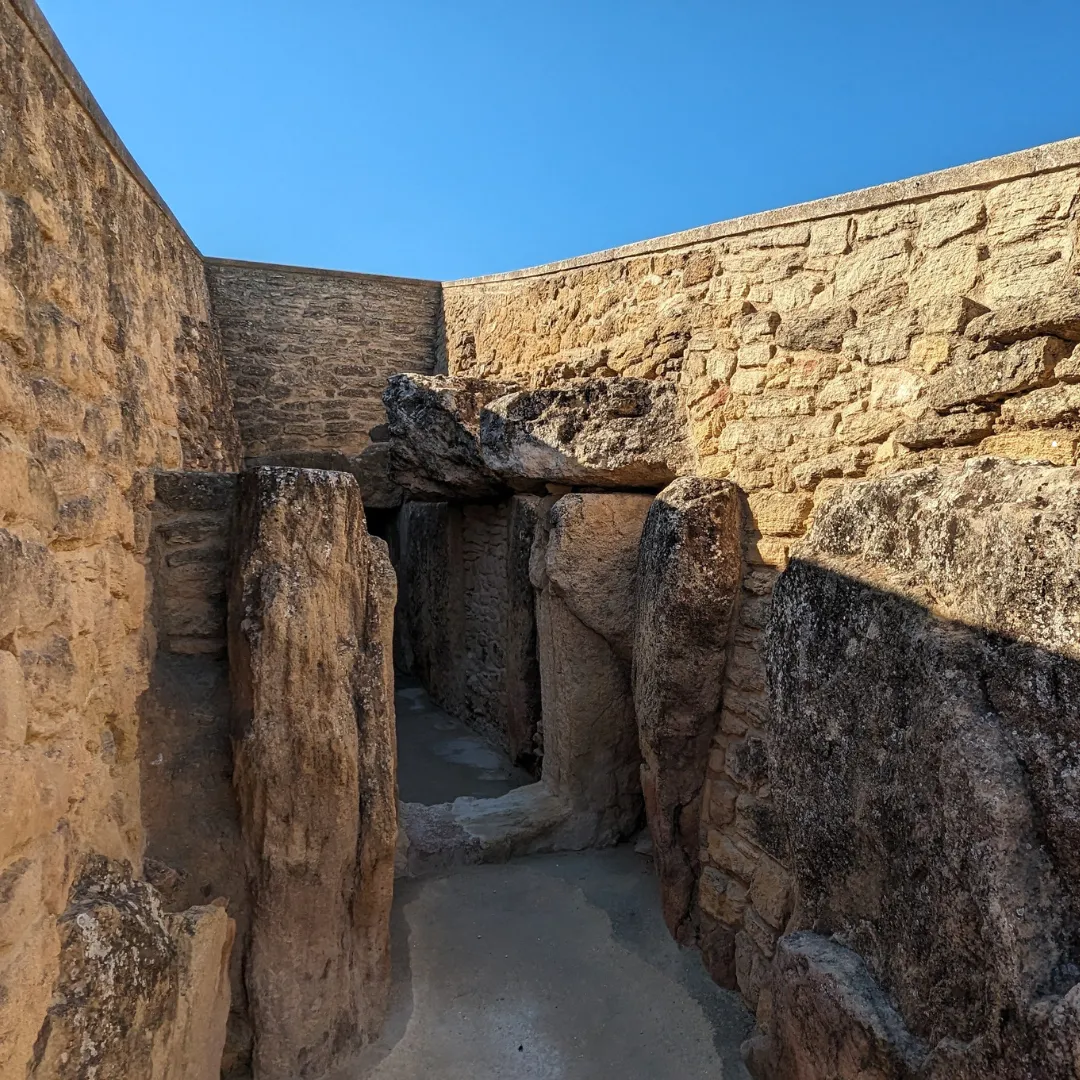
Viera teaches you about intention. This dolmen is smaller. More intimate. Aligned with the equinoxes—sunlight penetrating the chamber at specific moments. Not to see the sun. To mark sacred time. To express the builders' understanding of astronomy and mathematics. To demonstrate that this alignment wasn't accidental.
El Romeral
El Romeral teaches you about synthesis. It combines what you've learned from the other two. But it adds something new: orientation toward the mountain (Camorro de las Siete Mesas). The message shifts from earth and sun to include landscape. To say: we are positioned within a whole system.
Three structures. Three separate moments in time. But viewed together, they reveal one unified cosmology.
That's what this day investigates.
What This Day Includes
The Journey to Antequera
(90 minutes)
From your hotel in Seville´s city centre, with context and history unfolding during the drive. Not just logistics. The journey itself begins the investigation. By the time you arrive, you're already thinking about the questions the dolmens ask.
Traditional Breakfast
(30 minutes)
The Mollete—soft bread of Arabic origin, toasted, drizzled with cold-pressed olive oil from local groves. This isn't an amenity. It's evidence. The bread and oil come from the same landscape the dolmens sit in. You're being nourished by place. That matters.
Menga: The Earth
(60-90 minutes)
Time to stand in the presence of those 180-ton stones. We´ll walk with you inside this marvel World Heritage Unesco site. To ask: how? Why? What did they believe in? Your guide—someone who's studied these for decades—doesn't answer these questions. They teach you how to ask them more carefully.
Viera: The Sun
(45-60 minutes)
Smaller. More intimate. A corridor aligned with precision toward equinox sunlight. Understanding shifts from "monumental scale" to "mathematical knowledge." You're encountering proof that these people calculated. Planned. Understood celestial mechanics.
El Romeral: The Mountain
(45-60 minutes)
The synthesis. The closure. Adding geography to earth and sun. Standing at this third location, you see the pattern. You understand why the ancient builders positioned these sites as they did. You grasp the cosmology that unified them.
Lunch
(90 minutes)
Not as refueling. As completion. The Porra Antequerana (tomato-based gazpacho), local cheese, regional wine. The food comes from the same earth and sun that oriented the dolmens. The meal becomes a way of saying: this place sustains those who understand it.
Return to Your Hotel
(90 minutes) Unhurried. Time to integrate what you've learned. To let the day settle into understanding.
Total Duration
Approximately 8-9 hours from Seville
The Guides
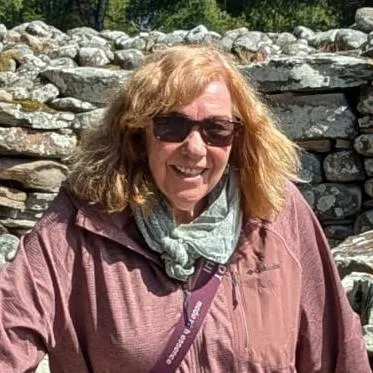
Luz Bona Puerta
Luz Bona has spent four decades leading travelers through the conventional history and the deep meanig of ancient cultures. She's studied the Antequera Dolmens not as a tourist attraction, but as a question. She understands what it means to stand in a space built 5,700 years ago and ask: what were they understanding that we've forgotten?
She doesn't perform expertise. She models curiosity.

Carlos Rodríguez
Carlos Rodríguez brings geographic and historical training, but what matters is what he does with it: he's spent thirty years thinking about connections. About how landscape shapes belief. About how food, geology, architecture, and time all tell one story if you know how to read it.
Together, they've designed this day so that each element builds on what came before. So that understanding emerges progressively, not all at once.
Why This Question Matters
What was the real motivation for our ancestors to build such an incredible structure for the future generations? A young man—maybe 25 years old—looks at a 40-ton stone and decides: I will dedicate my life to built this. To place it with precision. Building something I won't see finished.
His children might work on it. Their children might work on it. Many years later, when the structure is complete, that first young man is may be long time gone. He's worked his entire adult life for a monument he never saw completed.
Can such a commitment make sense nowadays?
This isn't an abstract historical question. It's a human question. It's about motivation. About what we're willing to dedicate ourselves to. About whether a commitment loses value if you don't live to see its completion.
Most people move through the world trying to accomplish things in their own lifetime. Get results. See outcomes. Achieve.
The ancient builders of Antequera chose something different. They chose to build for a future they wouldn't inhabit.
Understanding why changes how you think about legacy. About time. About what's worth dedicating yourself to.
The dolmens have been waiting eons for someone to ask that question seriously. This day is structured around looking for answers.
The Day Unfolds
Early Morning: Hotel Pickup
We collect you from your hotel. No rushing. As we drive—towards Antequera, through the Andalusian landscape—Luz and Carlos establish the context. What are we about to see? Why does it matter? How does everything connect?
By the time we arrive, you're already thinking in the framework the dolmens demand.
Antequera: The Threshold
Breakfast. The Mollete. Bread and oil that tastes like place. This simple act—eating food from the land where the dolmens sit—grounds you. Centers you. Prepares you psychologically for what's coming.
Menga: Entering the Question
You stand inside a chamber built when the world was unwritten. Stones overhead that took generations to move into position. Silence. Weight. Presence.
This is where the investigation actually begins. Not with information. With encounter.
Your guide won't fill the silence with facts. They'll sit in it with you. Let the place teach you. Ask questions that reveal your own assumptions about what ancient people understood.
Viera: Precision
Smaller chamber. Different purpose. But the same precision in alignment. Different message: we understand the sun's movement. We calculate. We build to capture this knowledge.
This is where your understanding shifts from "monumental" to "mathematical." You're encountering proof of sophisticated knowledge.
El Romeral: Synthesis
The third chamber adds geography. The landscape becomes part of the statement. These three sites together encode a cosmology: earth, sun, mountain. A unified understanding of the place and humanity's position within it.
By this point, you're not collecting sites. You're reading a script written in stone.
Lunch: Integration
Time to sit. To eat food from this landscape. To relax on your own. To let understanding consolidate.
The meal isn't separate from the investigation. It's the completion of it. You're tasting the same earth that held the builders' feet. That sustains this place still.
Return: Settling
Unhurried drive back to your hotel. Time to think. To integrate. To let the day become understanding rather than just memory.
Practical Details
Languages
Spanish and English (other arrangements by request)
What to Bring
- Comfortable walking shoes (the sites involve moderate walking on uneven terrain)
- Sun protection (Andalusian sun is intense; spring and fall are ideal)
- Water (we provide it, but bring your preferred hydration)
- Notebook (many people want to write during or after)
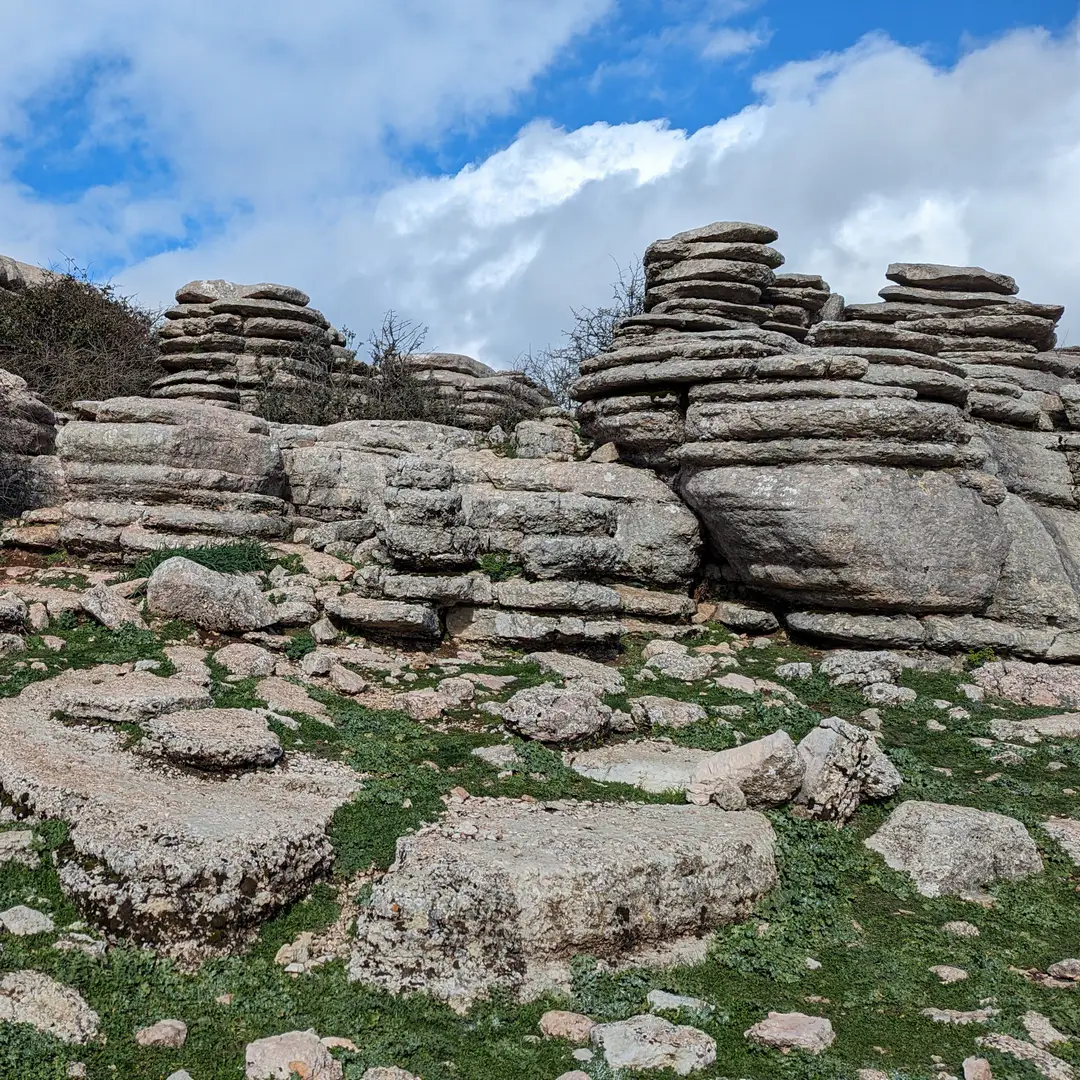
- Layers (temperature shifts at El Torcal and within the dolmen chambers)
Weather Considerations
We operate year-round. Spring (March-May) and fall (September-October) offer ideal conditions. Summer is hot; winter is mild. Plan accordingly.
Group Size
Private groups only. You, your companions, and your guides. This isn't shared experience. This is your investigation.
Accessibility
The dolmens involve standing, walking short distances, and entering chamber spaces with low ceilings in places. El Torcal involves 45 minutes of gentle to moderate hiking on uneven terrain. If accessibility is a concern, discuss with us—we can adapt routes and pacing.
Fares
Contact us for availability and personalized rates. Pricing varies based on group size, season and any specialized interests.
What's Included
- Private hotel pickup and return (Seville City centre)
- Personalized guide leadership throughout
- Dolmens entrance coordination and timing
- Traditional Mollete breakfast
Private transportation - All necessary coordination and entrance logistics
Not Included
- Restaurant lunch (we provide expert recommendations and can arrange reservations)
- Tips (appreciated but never expected)
Is This Right For You?
This day is designed for people who think differently about travel.
Good fit if
- You're interested in how ancient civilizations thought
- You want time to sit with big questions, not rush through attractions
- You're drawn to archaeology, geology, or the history of human meaning-making
- You enjoy understanding "why" more than seeing "what"
- You're comfortable with ambiguity and unanswered questions
- You want a full day investigating one landscape deeply, rather than visiting multiple sites superficially
The Central Question
Why build something you won't see finished?
"How did they do it?" (we will talk about it ;-).
But the deeper question: which belief system, understanding of time and legacy and conviction about human purpose made sense for them?
The dolmens don't answer this question. But they sit with it. They've been sitting with it for eons.
This day is an invitation for you to sit with it too.
Getting Started
When you're ready to investigate this question—when you're ready to spend a full day with people who've thought deeply about these sites, with time and silence and serious inquiry—reach out.
We'll discuss what you're curious about. When you're traveling. What aspects interest you most (geology, architecture, the spiritual dimensions, the cosmology, the food culture—the day adapts based on your investigation).
Then we'll design the experience for you.
It's not a tour you book from a menu.
It's an invitation to think about legacy, time, and what commitment actually means.