
How to Understand Spain in One Day: From Rome to the Dehesa
A Private Day in Seville's Untold Countryside, from Roman Itálica to the Heart of the Dehesa
Spanish Fighting Bull Ranch · Itálica Roman Ruins · Dehesa Ecosystem · Private Tour from Seville
When you visit a Spanish fighting bull ranch with the right guide, you don't just see an animal — you understand a geographical, ecological, and cultural legacy that reaches back thousands of years.
— Carlos Rodríguez, Official Seville Guide since 1990
Why This Spanish Fighting Bull Ranch Tour Matters
The Investigation
You can visit a Spanish fighting bull ranch as a tourist attraction. Take photos. See some bulls. Leave thinking you've understood something.
Or you can spend a day investigating a question that connects 2,000 years of history, an entire ecosystem, and a philosophy about how humans should live with forces beyond their control.
This day is structured as the second option.
It's not a tour in the conventional sense. It's a guided investigation. A sequence of places and conversations designed to show you how everything—Roman power, medieval land stewardship, modern ecology, food, culture—connects through one landscape.
You'll understand why by the end of the day.
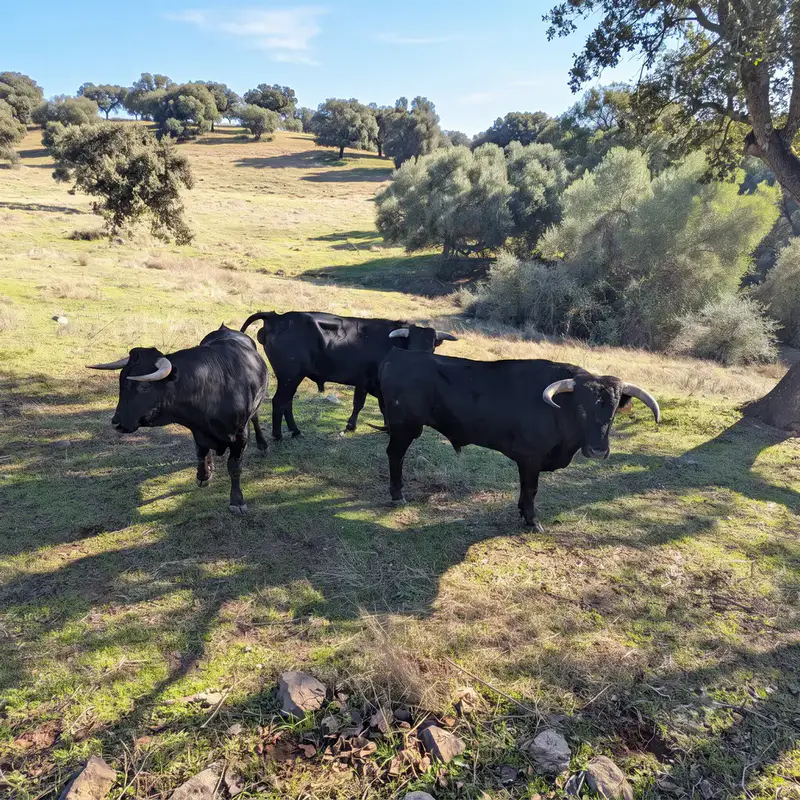
Experience a Spanish Fighting Bull Ranch Like No Other Tour Can Show You
This is a private experience — designed only for you and your group. No shared buses. No surface-level visits. Tell us when you're traveling.
The Structure
This investigation has a logic. A thread. You don't start at the ranch. You start at Itálica, the amphitheater where emperors walked. Then you move into the Dehesa, the working landscape that has sustained itself for centuries. Then you meet the bulls, and understand what they reveal about all of it.
Each place teaches you something. Each place builds on what came before. By the time you're standing in the field at sunrise, watching the hierarchy of the herd, you understand not just what you're seeing, but why it matters.
What This Day Includes
The Itálica Roman Ruins
(90 minutes)
Walking the amphitheater where Trajan and Hadrian once stood. Understanding the scale at which Rome built. Tracing the thread from imperial spectacle to contemporary landscape. Not as historical tourism, but as context. As evidence of how this land has been shaped by different civilizations' understanding of power.
The Dehesa Ecosystem
(180 minutes)
Entering the agro-silvo-pastoral system that's unique to this region. Walking through evergreen oaks and cork oaks forests that exist because of the bulls that graze them. Seeing the ecological balance that modern agriculture is only now learning to recognize. Understanding coexistence, not domination.
The Spanish Fighting Bull Ranch
(120 minutes)
Exclusive access to a working ganadería. Guided by the family who stewards it. Seeing the bulls in their actual environment—free-range, wild, living according to their nature. Understanding what the ganadero knows about respecting what you can't control. Learning the vocabulary: trapío (physical conformation), tienta (testing of young animals), bloodlines, genetics applied with intention over centuries.
The Appetizer on the Ranch
(60 minutes)
Local charcuteries. Local cheese. Andalusian wine. Not as amenities. As the completion of understanding. You eat the product of the landscape you've just walked through. The animal you've just observed in freedom. The ecosystem you've just understood. The meal makes sense because you've seen where it comes from.
(Optional) Meal in a local restaurant
(60 minutes)
We offer you the option of having a traditional meal in a local restaurant. On your own.
Private Transportation
From your hotel in Seville. Throughout the day. Back to your hotel. Unhurried. Time to integrate what you've learned. To let the day settle into understanding.
Total Duration
Approximately 6-7 hours from hotel to hotel.
The Guides
You'll spend this day with Carlos Rodríguez and/or Luz Bona Puerta.

Carlos Rodríguez
Carlos has a degree in Geography and History from the University of Seville. He's been an official guide since 1990. But those credentials don't explain what matters: he's spent thirty years thinking about this landscape. About how to help people understand it. About what connects Rome to the Dehesa to the bulls to the food you eat.
He doesn't perform expertise. He demonstrates thinking.
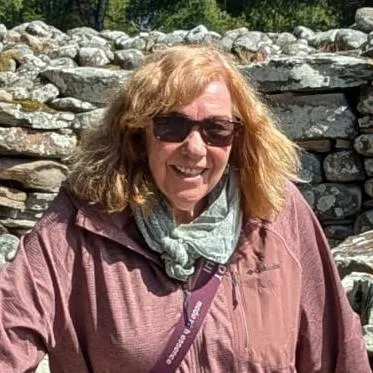
Luz Bona Puerta
Luz has spent four decades leading travelers through the conventional history and the deep meanig of ancient cultures. She understands what makes a day coherent. What makes a group function as an investigation rather than as a collection of tourists. She knows how to hold space for understanding to emerge.
Together, they've designed this day so that each element builds on what came before. So that by the end, you're not just collecting experiences. You're holding a different understanding of Spain.
Why This Day Matters
The Spanish fighting bull isn't just an animal. It's a keystone species. Its existence preserves thousands of hectares of Mediterranean forest that would otherwise be destroyed by industrial agriculture or urban sprawl.
The bull's presence shelters Iberian lynxes, imperial eagles, and endangered species. It protects Mediterranean flora that has vanished from most of Europe. The ranch is a living sanctuary, not because anyone intended it as charity, but because the economics of raising these animals actually align with ecological preservation.
That's rare. That's significant. That's worth understanding.
Modern environmental discourse treats profit and nature as enemies. The Dehesa proves they don't have to be. If you're willing to work with natural systems instead of against them. If you're willing to respect the animal's nature rather than trying to override it.
Understanding this—understanding how coexistence actually works in practice, not in theory—changes how you see everything else about how to live.
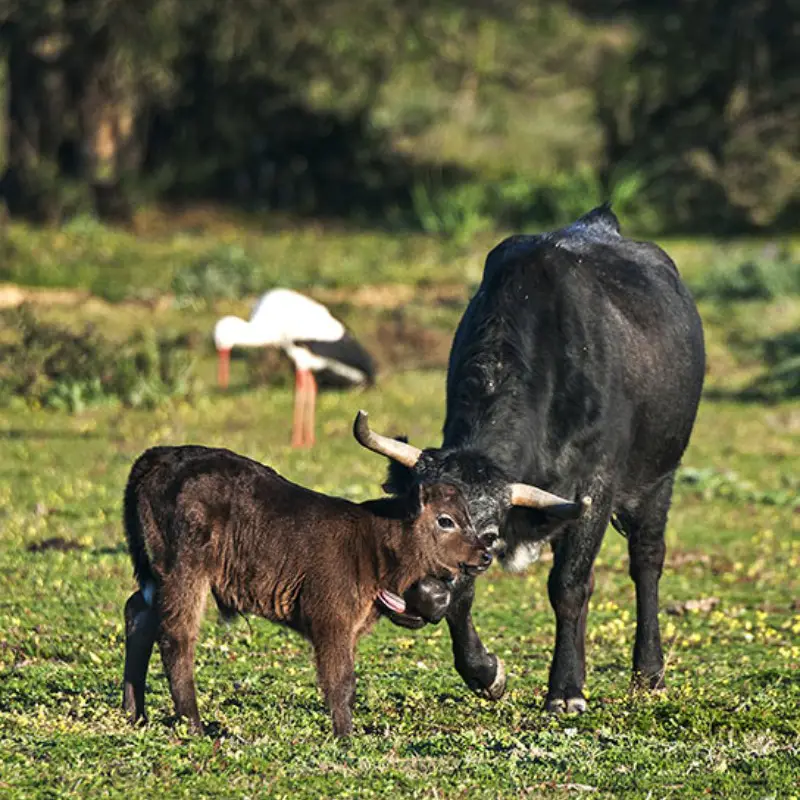
The Day Unfolds
Morning
Hotel Pickup
We collect you from your hotel in Seville city centre or at the river port. No rushing. The day begins with context, not logistics. As we drive, the guide explains what we're about to see. Why we're starting at Itálica. How Rome connects to what's coming.
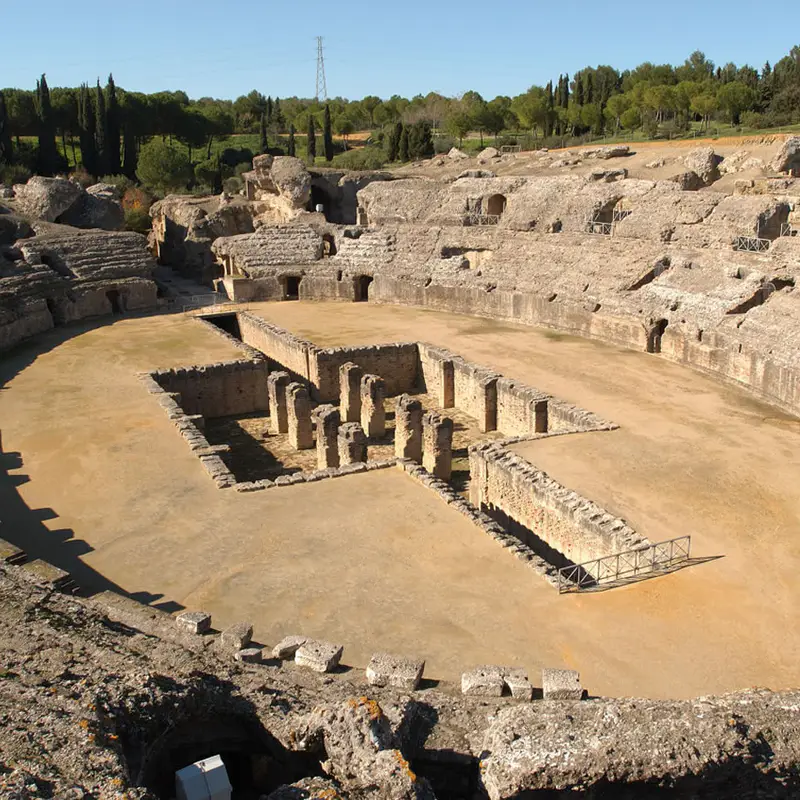
Itálica: The Ancestral Prelude
You stand in Italica´s amphitheater, where emperors were born. Walking paved streets that connected to Rome itself. Standing before one of the largest amphitheaters in the empire. Seeing the measure of human ambition at that scale.
This isn't sightseeing. Walking through Itálica we´ll explain to you the ancestral connection between Roma´s culture and our spanish Fighting bulls. What we see today in the ranch has deep roots in Rome.
Then you leave it behind and enter the Dehesa.
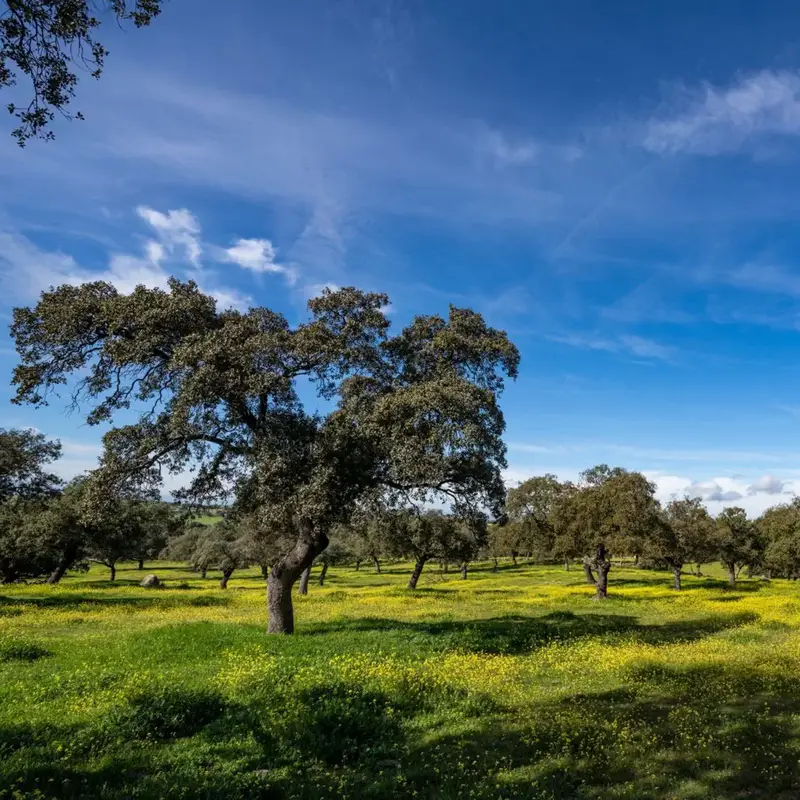
The Dehesa: The Living Answer (toured in special vehicles)
The landscape transforms. Neither wild forest nor cultivated field. An agro-silvo-pastoral system unique to this region. A relationship between human stewardship and natural systems that's been refined over centuries.
Here, power isn't about domination. It's about understanding. The ganadero doesn't control the landscape; he works within its logic. The bulls don't serve human purposes; they sustain the ecosystem. The forest doesn't exist for human extraction; it provides for both animal and human through coexistence.
Walk through this landscape and you see evidence of a different philosophy about how to live.
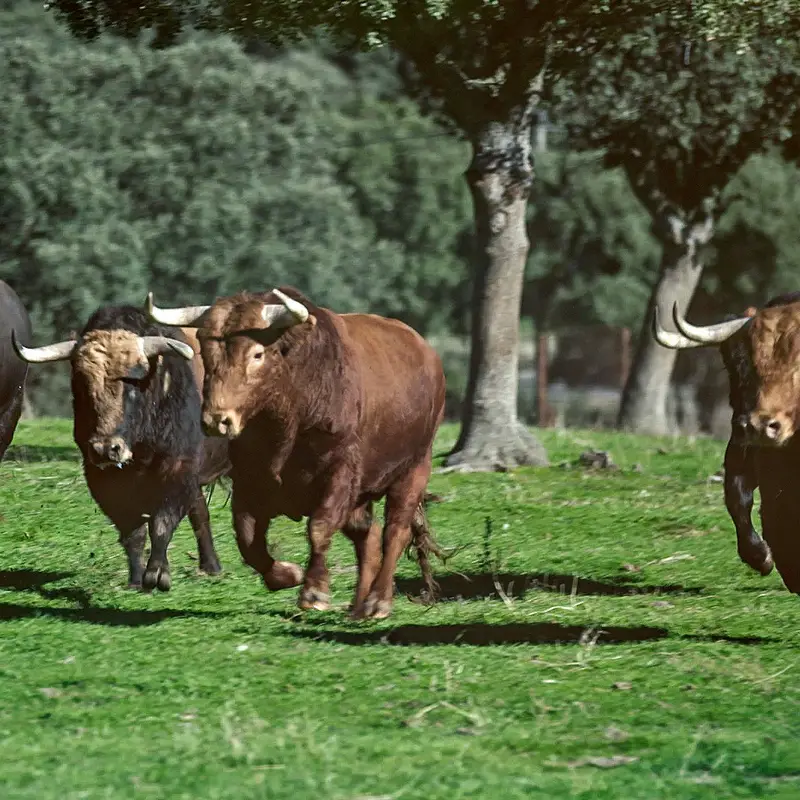
The Spanish Fighting Bull Ranch: The Living Investigation
Access to a working ganadería. Not as spectacle. As education.
You'll see bulls in their actual environment. Understand the hierarchy of the herd. Learn what trapío means—the physical conformation bred into the animal over 30+ generations. Understand tienta—the testing that reveals what the animal is capable of.
The ganadero will explain bloodlines. Genetics. The centuries-long process of selective breeding that's shaped this animal. The meticulous attention required to maintain genetic purity while continuously refining strength, courage, and independence.
We will drive in special vehicles in the farm to have the oportunity to see the herd in a safe enviromment
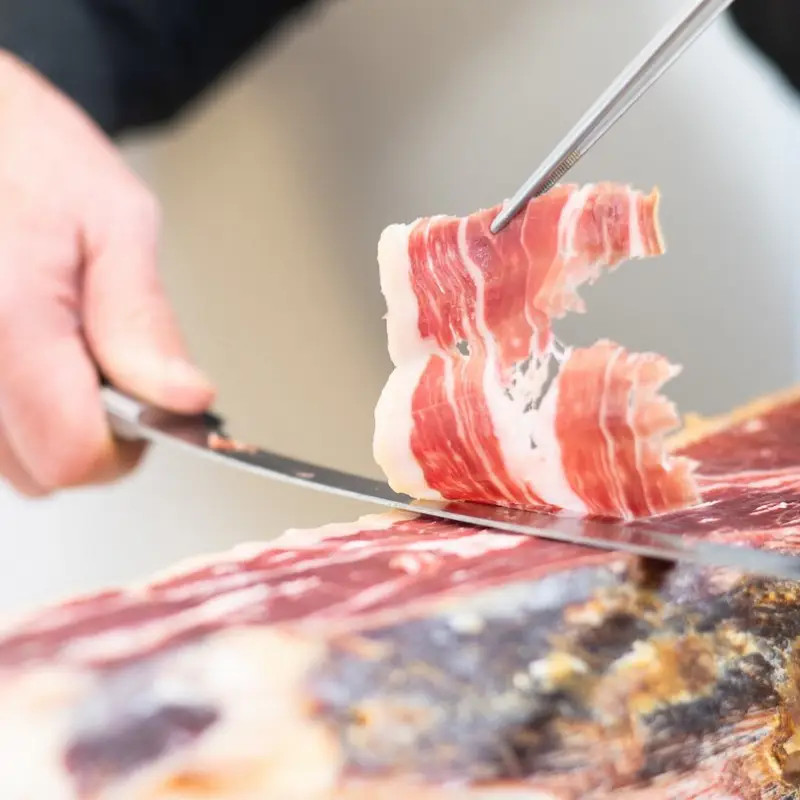
The Appetizers: The Completion
On the ranch grounds. Local products. from pigs that grazed in these forests. Artisanal cheese. Wine from local vineyards.
Not as fine dining. As communion. As the final piece of understanding that connects landscape to animal to food to human nourishment.
You eat what the land produces. What the animal produces. What centuries of knowledge about this place have refined into sustenance.
Our appetizer break is unhurried. Time to absorb. To ask questions. To sit in the understanding that's emerged.
Return to Seville
Relaxed drive back to your hotel. Time to think. To let the day integrate into your understanding.
We can recommend restaurants for an optional meal on your own if you want to continue exploring Andalusian food, but the day's real learning is complete.
Practical Details
Languages
Spanish and English (or other arrangements by request)
What to Bring
- Comfortable walking shoes (the Dehesa requires walking)
- Sun protection (Andalusian sun is intense)
- Water and snacks (we provide water, but personal snacks help)
- Notebook (for thoughts; many people want to write)
Weather Considerations
We operate year-round. Spring and fall are ideal. Summer is hot. Winter is mild by most standards, but plan accordingly.
Group Size
Private groups only. You, your companions, and your guides. Not shared buses. Not group experiences. This day is designed for your investigation.
Accessibility
The Dehesa tour is in special vehicles and moderate walking on uneven terrain. The ranch visit involves standing and observation. If accessibility is a concern, tell us know.
Price
Contact us for availability and personalized rates. Pricing varies based on group size, season, and any customizations you want to add (extended time at specific locations, specialist interests in botany/ecology/history, etc.).
What's Included
- Private hotel or port of Seville pickup and return
- Personalized guide leadership (Carlos and/or Luz)
- Itálica entrance and guided exploration
- Ganadería access and education
- Ranch appetizer (local products, cheese, wine)
- Private transportation throughout
Not Included
- Restaurant lunch (we recommend restaurants and can arrange reservations)
- Tips (appreciated but never expected or required)
Is This Right For You?
This day is designed for people who want to understand, not just visit.
Good fit if
- You're interested in ecology, land management, or sustainability
- You want to understand Spanish culture at a deeper level
- You're willing to spend a full day investigating one landscape thoroughly
- You're drawn to places where different historical periods connect
- You want to understand how humans can live in relationship with nature
The Central Question This Day Investigates
Why has a landscape that's been continuously inhabited for 2,000 years remained ecologically intact while most of Europe's Mediterranean regions have been industrialized into wastelands?
The answer involves Rome, the Dehesa, the bulls, and a philosophy about how to live that most modern civilization has forgotten.
By the end of this day, you'll understand that answer not as information, but as evidence you've walked through.
Getting Started
When you're ready to investigate this question—when you're ready to spend a full day understanding how Rome, ecology, bulls, and food connect through one landscape—reach out.
We'll discuss what you're curious about. When you're traveling. What aspects interest you most (history, ecology, animal behavior, gastronomy—the day adapts).
Then we'll design the experience for you.
It's not a tour you book from a menu.
It's an invitation to think differently about Spain.